
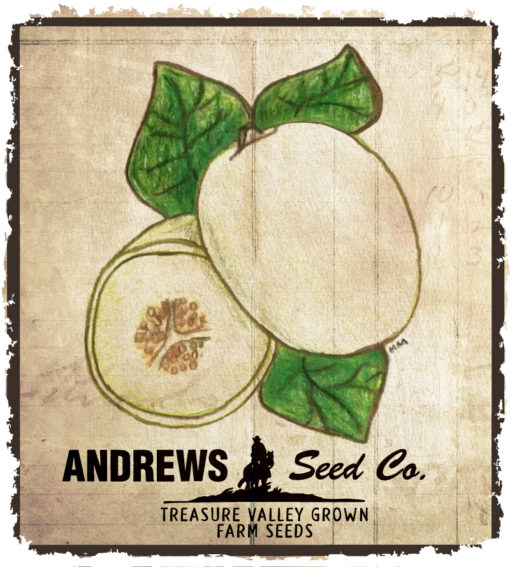
Honeydew (Green Flesh)
$ 3.71
Planting Guide Open-pollinated. Superbly sweet honeydew. A very smooth-skinned melon with a hard rind ripening pale green to ivory-gold and a small seed cavity. The lime-green, juicy flesh has superb sweetness and delightful aroma. High-yielding vines produce large fruits up to 6 lb., 7-9″ long and 5-6″ wide that store and ship well. Best suited for the South and Southwest or a southern exposure; it needs to be pampered elsewhere. Honey dews, native to Central Asia but long grown in France, were introduced into the US in the 1900s. This gorgeous, lime-green-fleshed melon updates this class with high yields of large, flavorful fruits. Special Instructions: Melons will thrive in warm, well-draining soil high in organic matter with pH between 6.5-7.5. Sandy loam is best. Melons are heavy feeders. Give 80-120 lbs of N per acre. Calcium deficiency can lead to blossom end rot, especially when adequate moisture is not available. Use dolomitic limestone. Manganese in excess can cause black spot. When Boron is deficient, fruit may crack. When to harvest: Harvesting melons at perfect maturity can be tricky, each type is a little different. In general: cantaloupes slip from vine when ripe; charantais types can be cut when they have a thick netted skin (they are a bit over-ripe if they slip); galia types slip from the vine and are ready when skin turns bright yellow; honeydews can be cut from the vine when skin turns color. Other indicators of ripeness are when the leaf closest to fruit becomes dried and shriveled and when the stem becomes corky. *** The first flowers to appear on the vines are male, and drop naturally. The later flowers are female and form the fruit.
Related products
$ 14.40
$ 3.71
$ 14.40
$ 3.71
$ 14.40
$ 3.71
$ 14.40
$ 3.71